Product Introduction
VPSA Oxygen Generator
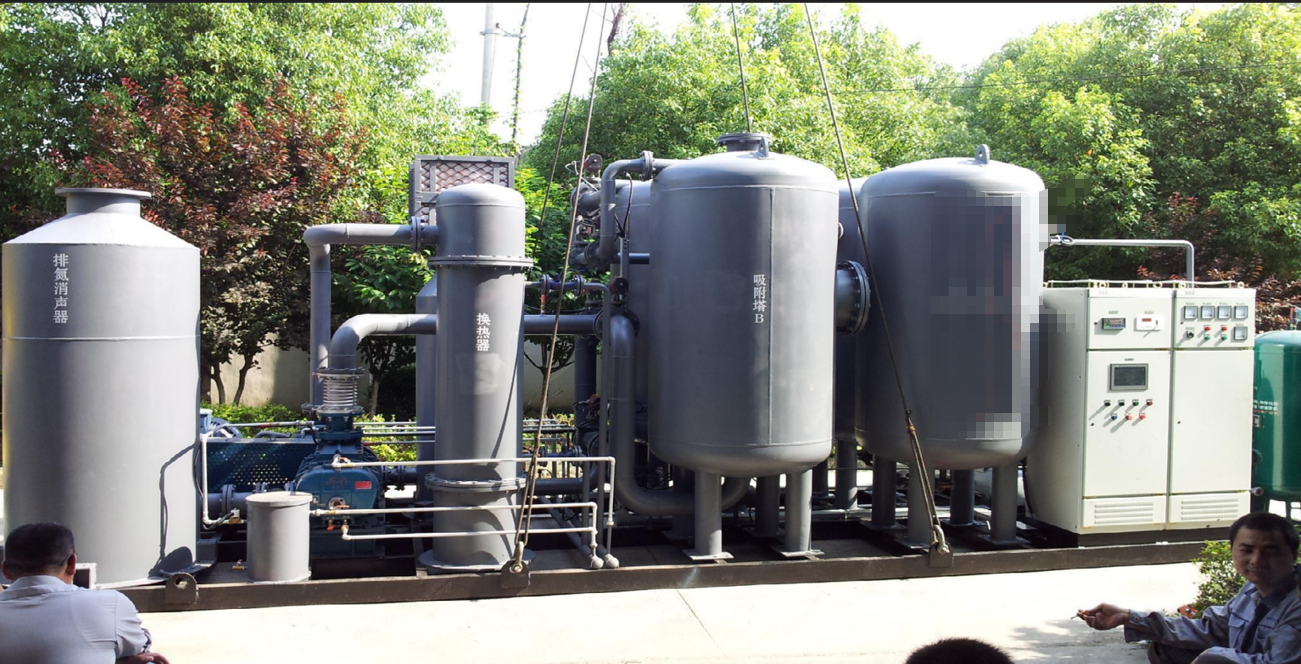
The Hongbo VPSA Oxygen Generator is an industrial oxygen generation system that uses Vacuum Pressure Swing Adsorption (VPSA) technology to separate and enrich oxygen from ambient air.
The system mainly consists of a blower, vacuum pump, cooler, adsorption system, oxygen buffer tank, and control system. By combining molecular sieve adsorption with vacuum desorption, the equipment separates oxygen from nitrogen and other air components without relying on conventional cryogenic air separation.
The adsorption system uses a specially designed airflow distribution structure to improve airflow uniformity and molecular sieve bed utilization. Its vertical double-bed structure incorporates active alumina to reduce the influence of moisture on molecular sieve adsorption performance. During operation, vacuum desorption and nitrogen purging help regenerate the adsorbent and maintain its service life.
Hongbo's VPSA Oxygen Generator is designed for industrial users requiring an on-site oxygen supply. System configuration can be evaluated according to the required oxygen flow rate, purity, delivery pressure, operating conditions, and installation requirements.
Product Features
Key Features of Hongbo VPSA Oxygen Generator
1. Special Airflow Distribution Structure
The adsorber adopts a specially designed airflow distribution structure to promote uniform airflow through the molecular sieve bed. This helps improve adsorbent utilization and supports stable oxygen generation.
2. Vertical Double-Bed Adsorption Structure
The vertical double-bed arrangement incorporates active alumina in the lower layer to reduce the impact of moisture on molecular sieve adsorption performance. Combined with vacuum desorption and nitrogen purging, the design supports effective adsorbent regeneration and extended molecular sieve service life.
3. Specialized Molecular Sieve and Active Alumina
The system uses specialized molecular sieve selected for oxygen generation, together with dedicated active alumina for PSA/VPSA-related adsorption applications. These adsorbent materials are intended to maintain stable performance and protect the molecular sieve against the effects of moisture.
4. Integrated Oxygen Generation System
The blower, vacuum pump, cooler, adsorption system, oxygen buffer tank, and control system work together as an integrated oxygen generation unit. The configuration supports coordinated operation of the main process equipment.
5. Automatic Process Control
The control system coordinates equipment operation and process sequencing. The specific control configuration and automation functions can be confirmed according to the selected system design.
Working Principle
How Does a VPSA Oxygen Generator Work?
VPSA stands for Vacuum Pressure Swing Adsorption. It is an air separation technology that uses the different adsorption characteristics of gases to enrich oxygen from ambient air.
Unlike conventional PSA oxygen generation systems that generally rely on compressed air, a VPSA system uses a blower to supply air at relatively low pressure and a vacuum pump to regenerate the adsorbent. The adsorption and regeneration stages operate cyclically to support continuous oxygen production.
The typical process involves the following stages:
Step 1: Air Intake and Cooling
Ambient air enters the system through the air intake section. The blower supplies the required airflow, while the cooling equipment helps manage process temperature according to the system design.
Step 2: Adsorption and Oxygen Enrichment
Air enters the adsorption system, where molecular sieve selectively adsorbs nitrogen and other components. Oxygen-rich gas passes through the adsorbent bed and is collected as product gas.
Step 3: Vacuum Desorption
As the adsorbent approaches saturation, the process switches to the regeneration stage. The vacuum pump reduces the pressure inside the adsorption vessel, helping release the adsorbed gases and restore the adsorbent's separation capacity.
Step 4: Adsorbent Regeneration
Nitrogen purging and the regeneration cycle help remove residual adsorbed components. The system then prepares the adsorption bed for the next production cycle.
Step 5: Oxygen Buffering and Supply
The oxygen-rich product gas is collected in the oxygen buffer tank before being supplied to the downstream process. Buffer capacity and any additional oxygen compression requirements should be determined according to the user's flow and pressure requirements.
The adsorption and regeneration stages repeat under the control of the system, enabling a continuous industrial oxygen supply. The exact cycle sequence depends on the equipment configuration.
Main System Components
VPSA Oxygen Generation System Configuration
Blower
Supplies the airflow required by the oxygen generation process and delivers air to the adsorption system at the designed operating conditions.
Vacuum Pump
Creates the vacuum conditions required for adsorbent regeneration, helping desorb nitrogen and other components retained during the adsorption stage.
Cooling System
Helps regulate process temperature and supports the operating conditions required by the equipment.
Adsorption System
Contains the adsorption vessels and specialized adsorbent materials responsible for separating oxygen from nitrogen and other components in air.
Oxygen Buffer Tank
Provides temporary storage for oxygen-rich gas and helps accommodate variations between oxygen production and downstream consumption.
Control System
Coordinates the operation of the main equipment and the process sequence. Control architecture and instrumentation are configured according to the selected system.
Industrial Applications
Applications of VPSA Oxygen Generation Systems
VPSA technology can be considered for industrial processes that require a continuous supply of oxygen-rich gas. The final equipment configuration should match the required oxygen concentration, flow rate, pressure, and operating conditions.
Metallurgy and Steel Production
Oxygen enrichment and process oxygen supply for suitable steelmaking and metallurgical applications.
Wastewater Treatment
Oxygen supply for wastewater treatment processes where oxygen-enriched aeration is required.
Glass Manufacturing
Oxygen supply for compatible combustion and furnace processes.
Chemical Processing
On-site oxygen supply for industrial chemical processes designed to use oxygen-rich gas.
Pulp and Paper Production
Oxygen supply for compatible bleaching, oxidation, and other process applications.
These are potential application sectors for VPSA oxygen technology, rather than a claim that every configuration is suitable for every process. Actual suitability depends on oxygen purity, required flow, pressure, and the process conditions.
Advantages of the Adsorption System
Molecular Sieve Protection and Service Life
The adsorption system is an important factor in the long-term performance of a VPSA oxygen generation unit. Hongbo's design emphasizes airflow distribution, moisture management, and adsorbent regeneration.
Uniform airflow distribution: The specially designed distribution structure helps reduce uneven airflow through the adsorbent bed.
Moisture management: The lower active alumina layer helps reduce the effect of moisture on molecular sieve adsorption performance.
Vacuum regeneration: Vacuum desorption supports the removal of adsorbed components and restores the adsorbent's working capacity.
Reliable adsorbent performance: Specialized molecular sieve and active alumina are selected to support stable operation over repeated adsorption and regeneration cycles.
These design features help protect the molecular sieve and support long-term system operation. Actual service life depends on feed-air conditions, operating practices, adsorbent quality, and maintenance.
Technical Specifications
VPSA Oxygen Generator Specifications
The final technical parameters should be confirmed for the selected model and project. The current manual image does not provide a complete numerical specification table, so the following items should be populated using verified engineering data rather than estimated values.
Parameter |
Specification |
|---|---|
Product name |
VPSA Oxygen Generator |
Oxygen generation technology |
Vacuum Pressure Swing Adsorption (VPSA) |
Feed gas |
Ambient air |
Main equipment |
Blower, vacuum pump, cooler, adsorption system, oxygen buffer tank, control system |
Adsorbent |
Specialized molecular sieve and active alumina |
Control system |
According to system configuration |
Installation arrangement |
According to project requirements |
How to Select a Suitable VPSA Oxygen Generator
Information Required for System Selection
Selecting an industrial oxygen generation system requires more than specifying the desired equipment name. The following information helps determine an appropriate configuration.
Required oxygen flow rate: Specify the normal and peak oxygen demand, including any expected future capacity increase.
Oxygen concentration: Confirm the oxygen concentration required by the downstream process.
Delivery pressure: Identify the operating pressure at the point of use and whether additional oxygen compression is required.
Operating schedule: Indicate daily operating hours, continuous operation requirements, and load variations.
Installation conditions: Provide available floor space, cooling conditions, utility availability, and site environmental conditions.
Control requirements: Confirm whether the system needs local operation, remote monitoring, or integration with an existing plant control system.
Hongbo can evaluate these requirements to determine the appropriate equipment configuration and technical specifications.
Frequently Asked Questions
What does VPSA stand for?
VPSA stands for Vacuum Pressure Swing Adsorption. It is a gas separation technology that uses adsorption and vacuum-assisted regeneration to concentrate oxygen from ambient air.
How does a VPSA Oxygen Generator produce oxygen?
A blower supplies air to an adsorption vessel containing specialized molecular sieve. The adsorbent preferentially retains nitrogen and certain other air components, allowing oxygen-rich gas to pass through. When the adsorbent approaches saturation, vacuum desorption regenerates the bed for the next cycle.
What is the difference between VPSA and PSA oxygen generators?
Both technologies use adsorption to separate oxygen from air, but their operating conditions differ. Conventional PSA systems generally use compressed air and regenerate the adsorbent through pressure reduction. VPSA systems typically use a blower for low-pressure air supply and a vacuum pump for regeneration. The appropriate technology depends on oxygen demand, operating pressure, capacity, and overall operating costs.
Why does a VPSA Oxygen Generator use a vacuum pump?
The vacuum pump lowers the pressure inside the adsorption vessel during regeneration. This helps release the adsorbed gases and restore the molecular sieve's capacity for the next production cycle.
What is the function of active alumina in the adsorption system?
According to the product manual, the lower active alumina layer helps reduce the influence of moisture on molecular sieve adsorption performance. This helps protect the molecular sieve and supports its service life.
Can a VPSA Oxygen Generator operate continuously?
A properly configured VPSA system can provide a continuous oxygen supply through cyclic adsorption and regeneration. Actual production continuity and capacity depend on the adsorption arrangement, process controls, equipment configuration, and downstream demand.
How can I choose the right VPSA Oxygen Generator?
Provide the required oxygen flow rate, concentration, delivery pressure, operating hours, and site conditions. These details allow the supplier to evaluate system sizing and configuration.