Installing an industrial nitrogen generator is not simply a matter of placing the machine in your workshop and connecting a few pipes. Before the equipment arrives, several site conditions need to be checked to make sure the system can operate safely and deliver nitrogen consistently.
In our experience with industrial gas equipment, many installation problems actually start before the machine is installed. A workshop may have enough floor space but poor ventilation. The compressed air pipeline may already exist, but its capacity may not be sufficient for the new nitrogen generation system.
These details can affect equipment performance, nitrogen purity and long-term operating costs.
So, what should you prepare before installing a PSA nitrogen generator? Let's go through the main requirements from an engineering perspective.
1. Prepare Enough Installation Space
The first thing to consider is the available installation space.
A PSA nitrogen generator usually works together with other equipment, including an air compressor, air storage tank, air dryer, filtration units and nitrogen storage tank.
If you are installing a complete nitrogen generation system rather than a standalone nitrogen generator, you need to consider the overall equipment layout.
Before confirming the installation location, check the following points:
Equipment footprint: Make sure the workshop has enough floor space for all equipment and connecting pipelines.
Maintenance access: Leave sufficient room around the equipment for routine inspection, filter replacement, valve maintenance and other servicing work.
Equipment arrangement: Position the air compressor, dryer, storage tanks and nitrogen generator in a logical sequence to simplify pipeline connections.
Future expansion: If your factory may increase nitrogen consumption in the future, consider reserving additional space for possible system expansion.
One common mistake is choosing an installation location based only on the dimensions of the nitrogen generator itself.
Remember that the entire gas production system needs space, not just the main machine.
2. Check Workshop Ventilation and Temperature
Ventilation is another important factor, especially for PSA nitrogen generation systems.
During operation, the air compressor and other electrical and mechanical components generate heat. If the equipment is installed in a small, enclosed room without sufficient air circulation, heat can gradually accumulate.
Excessively high ambient temperatures may affect equipment operation, increase the load on cooling components and shorten the service life of electrical parts.
For this reason, we generally recommend the following preparations:
Good natural ventilation
Whenever possible, choose a workshop with good natural air circulation. Avoid placing the nitrogen generation system in a completely enclosed corner.
Install exhaust ventilation when necessary
If the equipment must be installed in a separate equipment room, consider installing exhaust fans to remove accumulated hot air.
Keep air inlets unobstructed
Do not place materials, packaging or other equipment close to ventilation openings.
Avoid direct heat sources
Keep the nitrogen generation system away from furnaces, boilers and other equipment that continuously produces high temperatures.
The actual ventilation requirements depend on the installed equipment configuration, compressor power and workshop conditions.
3. Prepare a Stable Electrical Power Supply
A PSA nitrogen generator requires a reliable electrical supply to operate its control system, pneumatic valves and associated equipment.
If the system includes an air compressor and refrigerated air dryer, their electrical requirements must also be considered.
Before installation, your electrical engineer should check:
Whether the available power supply matches the equipment nameplate.
Whether the workshop electrical capacity is sufficient for the complete system.
Whether the power distribution cables and circuit breakers are properly selected.
Whether reliable grounding protection is available.
Whether the power supply has significant voltage fluctuations.
For factories located in areas with unstable electrical networks, additional voltage protection may be worth considering.
One important point: Do not check only the nitrogen generator's electrical requirements. The air compressor and other auxiliary equipment may account for a significant part of the total electrical load.
The complete system should be evaluated together before the installation date.
4. Make Sure Your Compressed Air System Is Ready
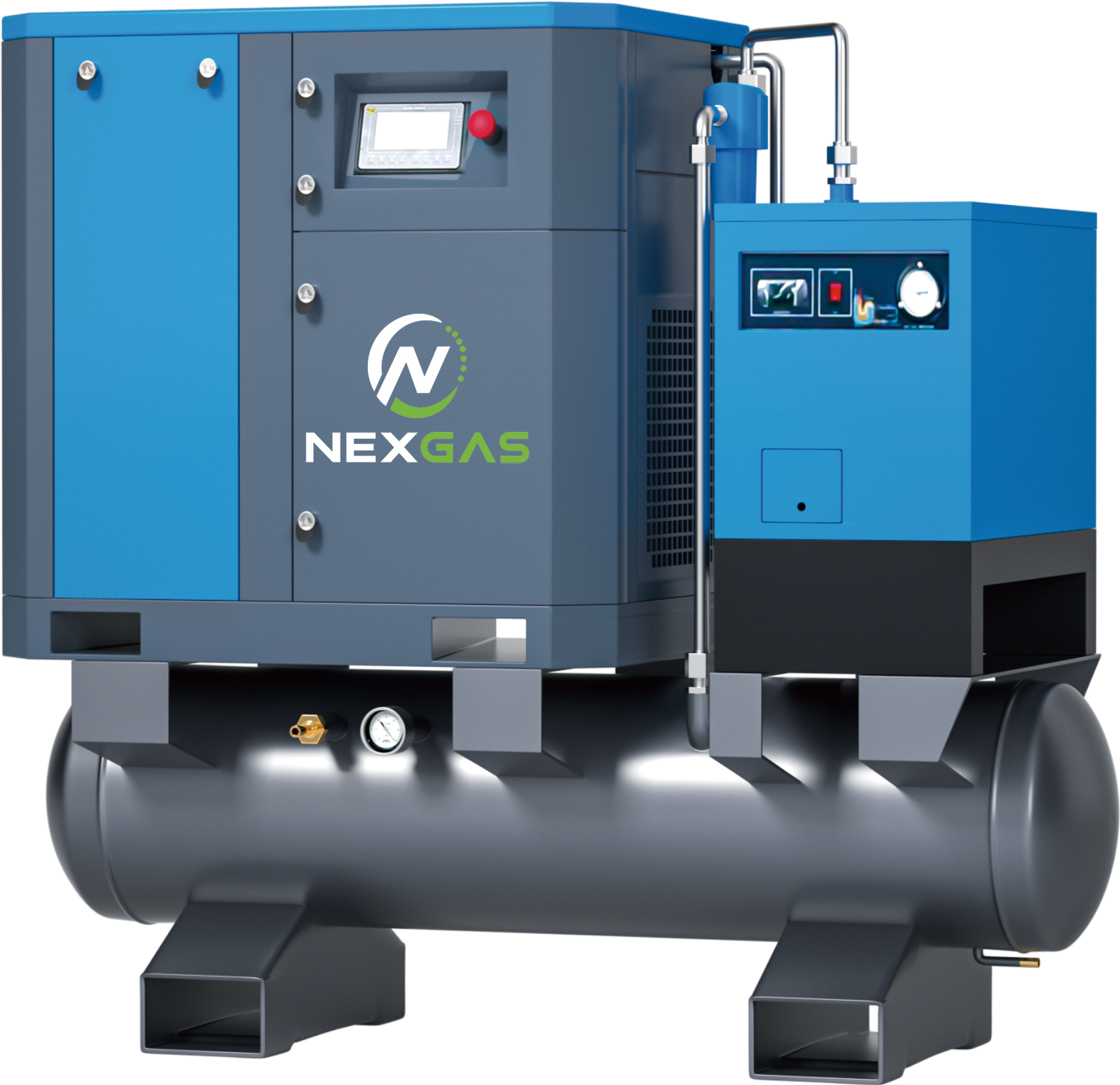
This is one of the most important parts of preparing for a PSA nitrogen generator installation.
Unlike bottled nitrogen, a PSA nitrogen generator uses compressed atmospheric air as its raw material. It separates oxygen from the air through pressure swing adsorption technology.
Inside the adsorption towers, carbon molecular sieve (CMS) selectively adsorbs oxygen under pressure. Through alternating pressurization and depressurization cycles, nitrogen is continuously produced.
However, the quality of the incoming compressed air has a direct influence on the performance and service life of the molecular sieve.
If the compressed air contains excessive moisture, oil or other contaminants, it may affect the adsorption process and damage internal components.
A typical compressed air supply system includes:
Air Compressor: Provides the compressed air required by the nitrogen generator.
Air Storage Tank: Helps stabilize the compressed air supply and reduce pressure fluctuations.
Air Dryer: Removes moisture from the compressed air.
Precision Filters: Remove oil aerosols, particles and other contaminants.
PSA Nitrogen Generator: Separates oxygen from compressed air to produce nitrogen.
Before installation, check whether your existing compressor can provide sufficient airflow and stable working pressure.
For reference, Hongbo's PSA nitrogen generator technical specifications use 0.8 MPa compressed air as the design basis for the listed performance data.
This does not mean every installation must use exactly the same configuration. The actual compressor capacity, working pressure and filtration arrangement should be matched to the selected nitrogen generator model.
An important engineering tip: If you already have an air compressor in your factory, don't assume it can automatically support a new nitrogen generator. Its actual available airflow, operating pressure and air quality should be checked first.
5. Plan the Nitrogen Pipeline Layout
After nitrogen is produced, it needs to be delivered to the actual production equipment through a suitable pipeline system.
A poorly designed pipeline can cause unnecessary pressure loss, unstable supply pressure and difficulties during maintenance.
Here are several things worth considering before installation.
Pipeline diameter
The nitrogen pipeline should be selected according to the required nitrogen flow rate, working pressure and pipeline length.
An undersized pipeline may create excessive pressure drop, particularly when several production lines consume nitrogen simultaneously.
Pipeline material
Choose pipeline materials compatible with the nitrogen purity and pressure requirements of your application. For high-purity applications, the internal cleanliness of the pipeline is especially important.
Pipeline routing
Keep the pipeline layout as straightforward as practical. Avoid unnecessary bends and long routes that may increase pressure losses.
Pressure monitoring
Install suitable pressure gauges at important points, particularly near the nitrogen generator outlet and major consumption areas.
This makes it easier to identify pressure fluctuations and troubleshoot supply problems.
Drainage and maintenance
The compressed air system should have suitable condensate drainage arrangements. Provide accessible locations for inspection and maintenance.
It is also worth planning the nitrogen storage tank location in advance if your system requires additional buffering capacity.
6. Check the Floor and Installation Foundation
Industrial nitrogen generation equipment is generally installed on a solid, level workshop floor.
Before the equipment arrives, check whether the installation area can support the total equipment weight.
Pay particular attention to the following:
The floor should be level and stable.
The foundation should be capable of supporting the equipment and associated storage tanks.
The installation area should not have persistent standing water.
Condensate drainage should be properly arranged.
Equipment should be positioned to avoid unnecessary vibration transmission.
For larger nitrogen generation systems, the installation foundation should be evaluated according to the actual equipment dimensions and operating weight.
If your factory plans to install the system on an upper floor or an elevated platform, it is advisable to confirm the structural load capacity beforehand.
7. Match the Installation Conditions to Your Nitrogen Requirements
Not every factory needs the same nitrogen generation configuration.
A small packaging workshop and a large metal processing plant may have completely different requirements in terms of nitrogen flow, purity and pressure.
Before selecting an installation location, it is helpful to understand the basic technical requirements of your production process.
Hongbo's PSA nitrogen generator range covers the following technical specifications:
Parameter |
Hongbo PSA Nitrogen Generator |
|---|---|
Nitrogen production capacity |
1–5,000 Nm³/h |
Nitrogen purity |
90–99.9995% |
Nitrogen outlet pressure |
0.01–0.8 MPa (gauge pressure) |
Nitrogen dew point |
-40°C to -70°C (atmospheric dew point) |
The figures above are the product range specifications stated in Hongbo's technical catalogue. Actual performance depends on the selected model and operating conditions.
These specifications provide a useful starting point for planning the installation.
For example, if your production process requires high-purity nitrogen, you should consider not only the generator itself but also the nitrogen pipeline cleanliness, storage arrangements and downstream gas consumption.
If your factory has multiple production lines, the nitrogen demand during peak operating periods should also be considered.
Selecting the correct system first makes the installation process much easier.
8. Pre-installation Checklist: What Should You Confirm?
Before the nitrogen generator is delivered, we recommend checking the following items with your engineering or maintenance team.
Item |
What to Check |
|---|---|
Installation space |
Sufficient room for the complete system and maintenance |
Ventilation |
Good air circulation and heat dissipation |
Electrical supply |
Stable power matching equipment specifications |
Air compressor |
Sufficient airflow and working pressure |
Air treatment |
Air dryer and suitable filtration equipment |
Nitrogen pipeline |
Correct diameter, material and connection positions |
Foundation |
Level floor and sufficient load-bearing capacity |
Drainage |
Proper condensate drainage arrangements |
Equipment layout |
Accessible positions for inspection and maintenance |
Completing these checks before delivery can prevent many unnecessary installation delays.
If any site conditions are uncertain, it is better to discuss them with the equipment manufacturer before finalizing the equipment configuration.
9. Frequently Asked Questions
Q1: Can a nitrogen generator be installed in a small equipment room?
Yes, provided that the room has sufficient space for the complete system, adequate ventilation and convenient access for maintenance.
For enclosed rooms, additional mechanical ventilation may be required to prevent heat accumulation.
Q2: Can I use my existing air compressor with a new PSA nitrogen generator?
In many cases, yes. However, you need to confirm whether the existing compressor can provide sufficient airflow and stable working pressure.
You should also check the compressed air quality and whether the existing dryer and filtration system are suitable for protecting the nitrogen generator's carbon molecular sieve.
Q3: Does a nitrogen generator require a special foundation?
Most standard installations can use a suitable level industrial floor, provided that it has sufficient load-bearing capacity.
For larger equipment or special installation locations, foundation requirements should be confirmed according to the actual equipment configuration.
Q4: How much space should I reserve for a nitrogen generator?
There is no single standard installation area for every nitrogen generator.
The required space depends on nitrogen production capacity, equipment configuration, storage tank dimensions and maintenance access.
For this reason, we recommend confirming the overall equipment layout before preparing the installation area.
Q5: Should I install a nitrogen storage tank?
A nitrogen storage tank is commonly used to provide additional gas buffering and help stabilize the supply when nitrogen consumption fluctuates.
Whether you need one, and how large it should be, depends on your production demand, peak consumption and required outlet pressure.
Conclusion: Good Site Preparation Makes Nitrogen Generation More Reliable
Installing a nitrogen generator is a complete engineering project, not just an equipment delivery task.
The workshop environment, compressed air quality, electrical supply, pipeline layout and equipment foundation all contribute to the final operating performance.
From our engineering experience, the best approach is to evaluate these conditions before purchasing the equipment rather than waiting until the machine arrives.
At Jiangsu Hongbo Gas Equipment Technology Group Co., Ltd., we provide industrial PSA nitrogen generation solutions with production capacities ranging from 1 to 5,000 Nm³/h and nitrogen purity options from 90% to 99.9995%.
Whether you are planning a new nitrogen generation system or upgrading an existing gas supply installation, our engineering team can help evaluate your nitrogen requirements and equipment configuration.
Contact Hongbo to discuss your nitrogen generator project. Share your required nitrogen flow rate, purity, working pressure and workshop conditions with us, and we can help you determine a suitable nitrogen generation solution.